Skip to content
ErindaleLock ExpertsOpen 24/7 (289) 805-4851
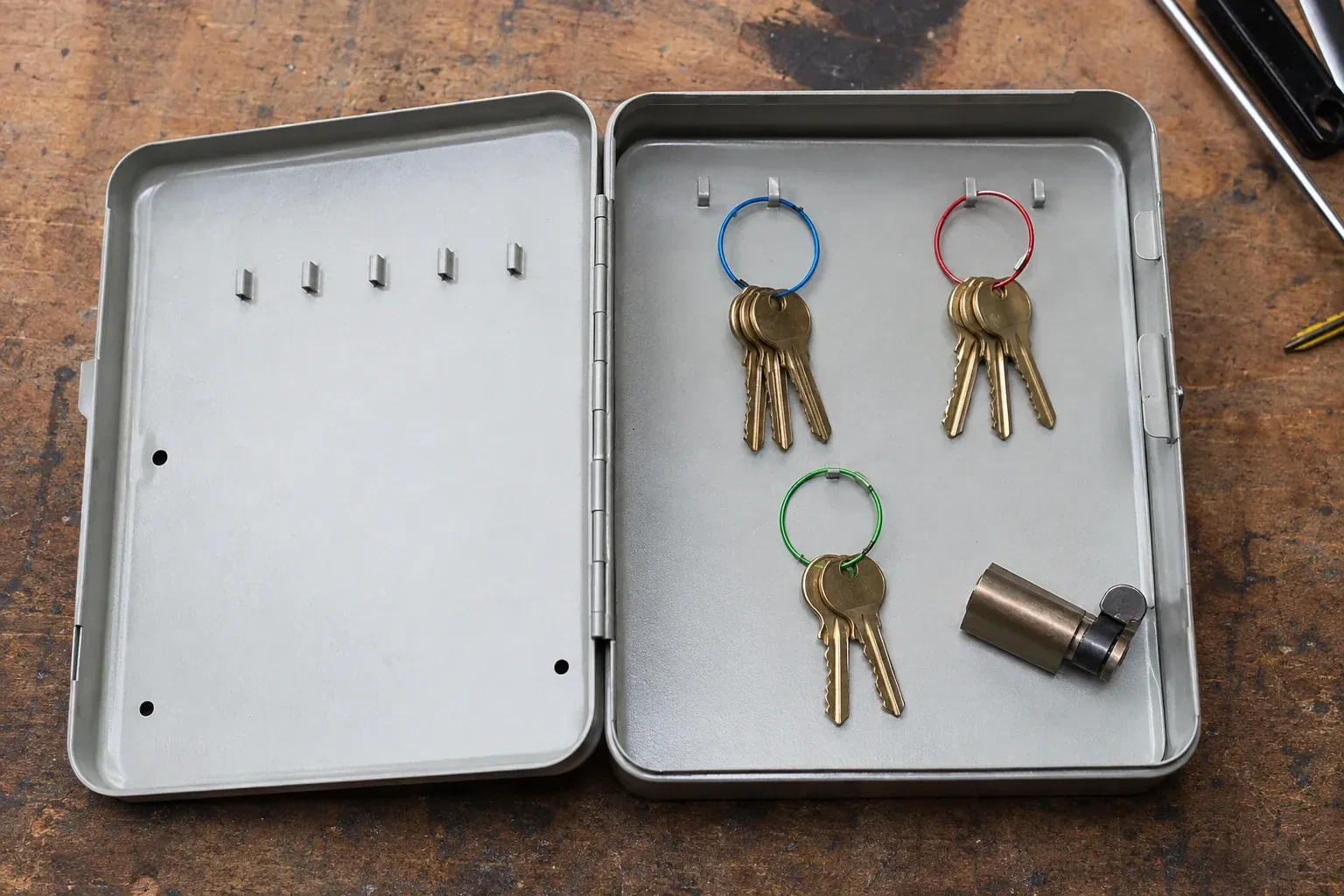
Three groups of keys on colored rings in an open metal key cabinet. — Master Key System Design, Sheridan Homelands

Commercial · Sheridan Homelands

Master Key System Design

After a busy shift the manager counts the keys coming back in and loses track of who still has one. The walk-in cooler, the liquor cage and the office desk are all supposed to be separate, but the same battered key seems to fit two of them.

In plain words

The process behind a master key system runs from conversation to chart. First comes a walk-through of every door and a conversation about who needs to open what, now and as the business grows. Next comes the design itself: grouping doors into change-key sets, deciding where sub-masters belong, and reserving a top-level master for a short list of people. Then the cylinders are pinned, cut and tested individually before any key is handed over. What the owner receives at the end is not just keys but a working hierarchy matched to compatible hardware and documented in a chart they control.

Sound familiar?Sheridan Homelands

The call
The office key ring has become the org chart. Every manager carries a fistful of cuts, a couple of staff hold copies nobody remembers issuing, and when someone asks which key opens the records room, three different people give three different answers.
NextHow the visit goes

Master Key System Design · Sheridan Homelands

How the visit goes

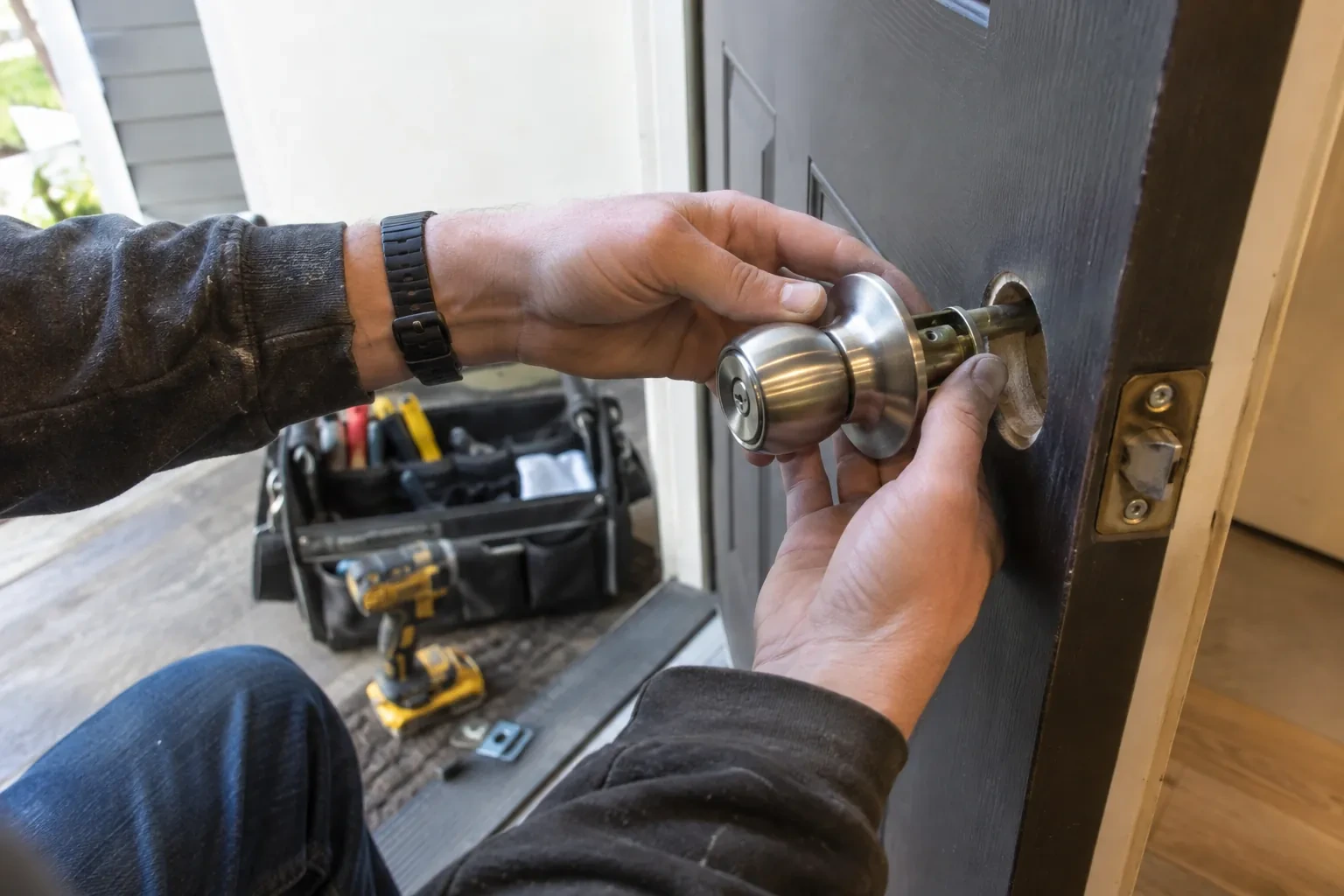
Hands fitting a steel door knob into the bore of a dark door, with a yellow drill and tool bag behind. — Sheridan Homelands
  1. Scene 1

    Who needs to open what

    Before any hardware is chosen, the locksmith records the organization's actual shape: which roles, departments or shifts need access to which doors, including exceptions such as a bookkeeper who needs the records room but not the loading dock. This map is built with the owner or manager, not guessed from existing keys, since existing keys often reflect years of ad hoc copying rather than any real plan. The output is a plain list of who should open what, which becomes the target the rest of the design is measured against, well before a single cylinder is touched or a key is cut.

  2. Scene 2

    Testing every level before it is trusted

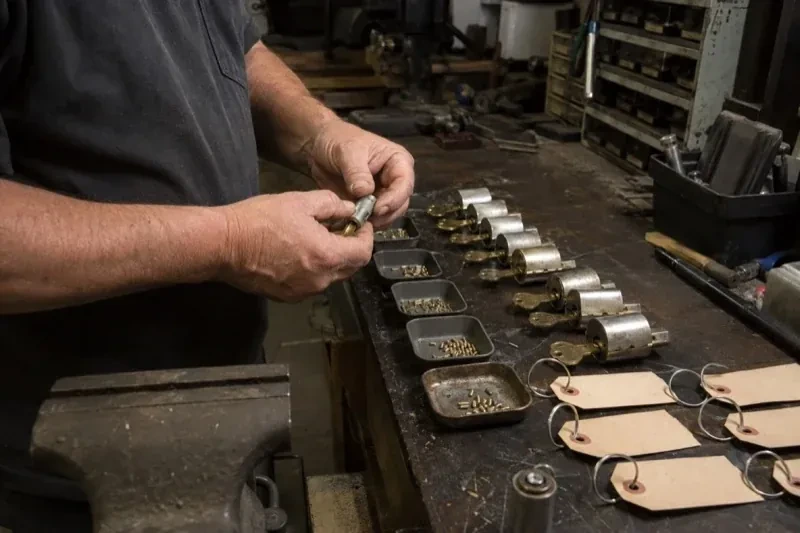
    Each cylinder is tested on the bench with its assigned keys before it goes back on the door, then tested again once installed: the change key on its own door, the relevant sub-master across its whole group, and the top-level master across the entire property. Any lock that opens with a key it should not respond to is pulled and corrected on the spot rather than noted for later, since a hierarchy that has not been proven lock by lock is only a plan, not a working system.

  3. Scene 3

    A building that finally matches its own org chart

    The most visible change is often the simplest one: the level of key someone carries now matches the role they actually hold, instead of matching whatever happened to be handed down or copied over the years. Walking the building afterward, each door answers to keys that were deliberately assigned to it, and the chart in the office explains every one of those decisions to anyone who asks about it.

In the van

  • Cylinder decoders
  • Restricted or standard key blanks
  • Change and master keys
  • Locking chart storage cabinet
  • Keying chart

What shapes the quoteErindale Lock Experts

Room reserved for future growth
Building spare capacity into the keying platform so a business can add doors later without a full redesign takes deliberate planning during the design stage. A property with clear expansion plans may choose a platform with more reserved combinations, priced differently from a minimal, current-needs-only design.
Testing scope before handover
Testing every cylinder individually and then testing each master and sub-master across its full group takes time proportional to how many doors and levels exist. A larger hierarchy with more levels to verify against more doors adds to that testing time.
How many locations are involved
A single building is simpler to assess and pin than several sites intended to share related levels of access. Travel between locations, and keeping the hierarchy consistent across more than one property, both add to the overall scope of the project.

FeesSame any hour

Have it ready

Before you call · 0 / 3

(289) 805-4851

Let's clear a few things up

How is the key chart kept private?

The chart is handed to a named administrator rather than left as loose paperwork, and it is stored somewhere only that person can reach, separate from day-to-day office records. It is not published, circulated widely or kept alongside general building documents. When the administrator role changes hands, custody of the chart moves with a signed acknowledgement rather than being passed along informally.

Do all the doors on my property need to be part of the master system?

No. Some doors, such as a private office or a room with a single regular user, can reasonably stay on their own key outside the hierarchy if there is no real benefit to including them. The assessment is partly about deciding which doors belong in the system and which are simpler left alone, rather than assuming every lock has to join.

Who should hold the top-level master key?

As few people as the business can genuinely operate with. Every additional holder is another way a full-access key can be lost, borrowed or copied without anyone deciding that should happen. A useful test during design is asking, for each proposed holder, whether they need to open every single door on the property or only a defined group; the second answer usually points to a sub-master instead.

Sheridan Homelandsinformation

PeelOntario

Town
Sheridan Homelands, Peel
In business
27 years
Hours
Open 24/7
Nights, weekends and holidays, same fees
Visits
On-site assessment preferred. Request a visit or call.

2021 census: what it means at the door

Every square is one home in a hundred.

  • 38 in 100 homes · mixed ages
  • About 38% of homes in Mississauga were built in 1980 or earlier, according to the 2021 Census.Where housing is mixed, doors that have been replaced sit beside doors that never were. A new door in an old frame, or an old door in a repaired frame, needs its strike and hinges checked together so the whole assembly works as one.
  • Single-detached houses make up about 37% of homes in Mississauga (2021 Census).Townhouse rows often share a keyway chosen by the builder. A locksmith can move a household onto a keyway of its own so a neighbour's key, or a key from the construction phase, no longer has any chance of fitting.

Source: Statistics Canada, Census Profile

Open Sheridan Homelands in Google Maps

On-site assessment

Request a visit.

After a busy shift the manager counts the keys coming back in and loses track of who still has one.

(289) 805-4851, open 24/7.