Advice is only useful when it fits your door, so we have kept these notes practical and specific. Real situations, real hardware, what to check and what to leave alone. Read what applies today and come back when the next question turns up.
- Bulletin 1Safe Opening & Combination Change: inside the visitTwo different problems can look identical from outside a locked safe: a combination that genuinely no longer opens it, and a mechanism that is jammed, corroded or blocked while the correct numbers still work perfectly.…Read
- Bulletin 2Panic & Exit Hardware: what shapes the quoteIt depends on the pair. Some latch independently and need nothing extra.Read
- Bulletin 3High Security Locks: preparing for the visitThe restricted keys you bought years ago are no longer restricted; the locksmith mentioned the patent has run out and blanks are sold openly. Your key control quietly stopped being control.Read
Let's clear a few things up
Lockout Services
Should I rekey my locks after being locked out?
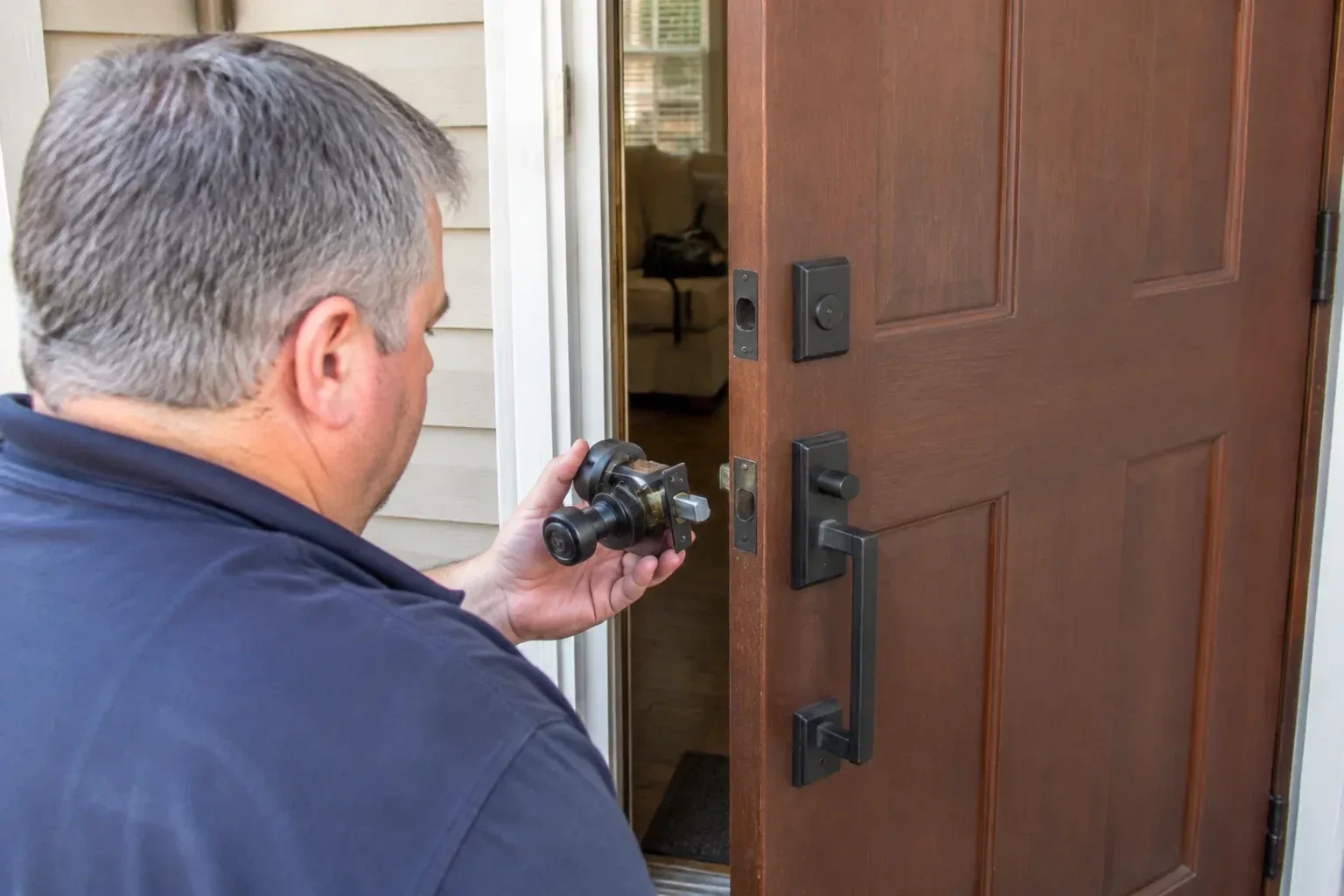
It depends entirely on where the key is. If it was inside the house the whole time, your locks are exactly as secure as they were yesterday and nothing needs changing. If the key was lost or stolen, rekeying is the sensible follow-up, because it retires that key for good while keeping your existing hardware. Lock manufacturers give a lost or stolen key as one of the main reasons to rekey, and doing it during the same visit saves a second call. Home Lockout Service
Can we put a keyed deadbolt on both sides of the back door for extra security?
On a door people leave through while the building is occupied, the door needs to open from inside with one motion and no key, so a key-both-sides bolt is not the right tool there. Security is added instead with a heavy-duty exit device and a reinforced strike, a keyed trim outside, an alarm contact, or a door position sensor on the access system, all of which keep the way out clear. Business Lockout Service
My key is a restricted or high-security type. Can it still be extracted and replaced?
Extraction is the same careful process; the keyway is usually narrower and the cuts more complex, so it takes longer. The replacement key is different: restricted blanks are cut only from the system's records, so have the authorization card that was supplied with the system to hand, or the locksmith who installed it is contacted. Until then the spare, if you have one, keeps the door working. Broken Key Extraction
Someone reached through the sidelight to turn the thumb-turn. Should I fit a deadbolt keyed on both sides?
It is tempting, but a thumb-turn lets everyone in the household leave by that door without hunting for a key, special device or special knowledge, so a keyed inside cylinder is the wrong fix. Better answers are a tested security-film system or laminated glass in the sidelight to slow an arm from passing, moving the deadbolt beyond arm's reach of the glass where the door allows, and a glass-break sensor if you have an alarm. Break-In Damage Lock Repair
Change or Rekey Locks
How many new keys will I get, and can I get more later?
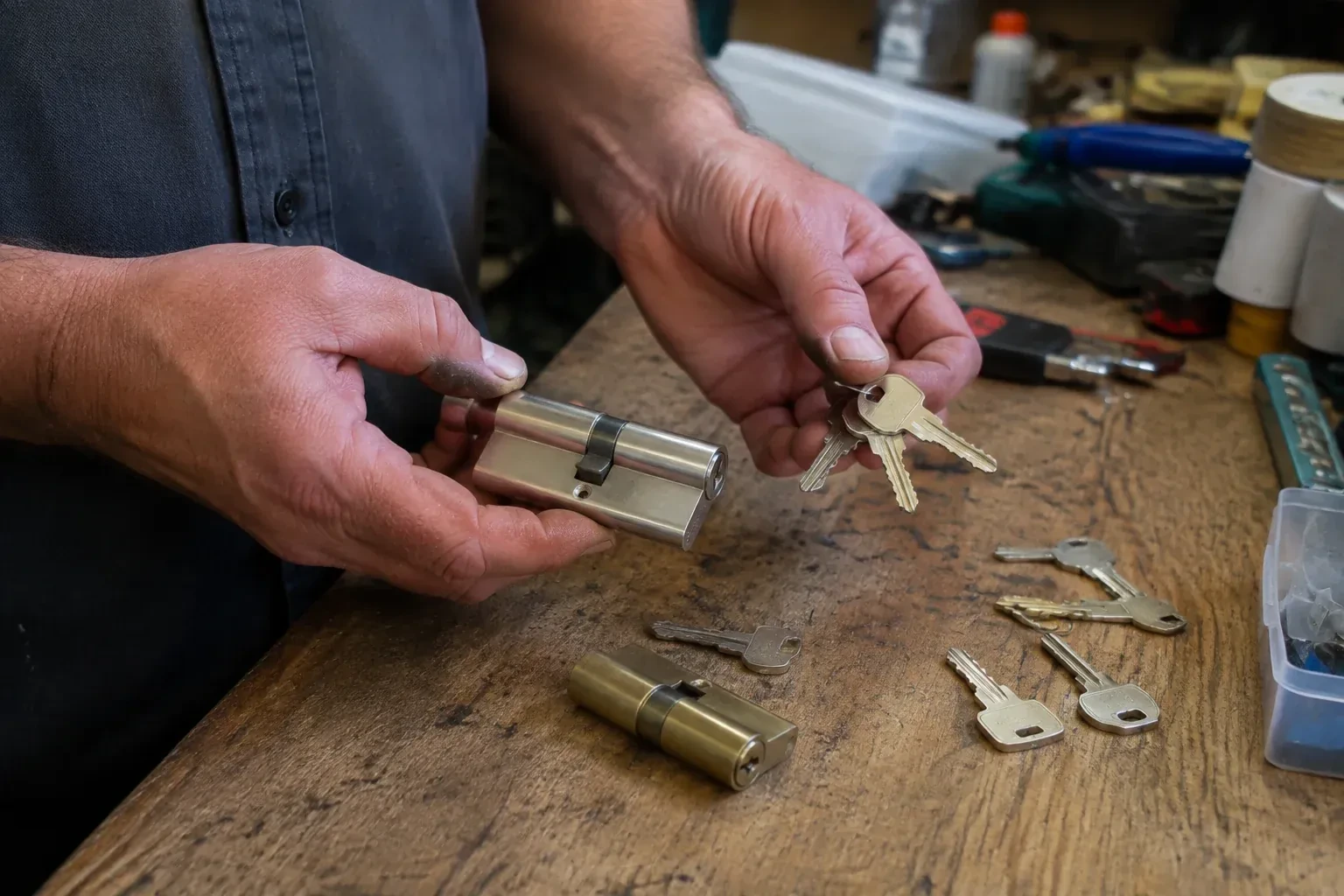
As many as you ask for, cut on site from the fresh pinning and tested in each door they should open; two or three is typical for a household. More can be cut later. When you do, bring one of the locksmith's originals to be copied rather than a copy of a copy, since every generation strays slightly from the intended depths. If any key is a restricted type, additional copies come from the record kept for that system rather than from a hardware store. Lock Rekeying
Will drilling a new deadbolt damage my steel or fibreglass door?
Not when it is done for that door. Steel-clad doors are cut with a fine-toothed hole saw run slowly through the skin, guided by a jig so the saw cannot skate on the smooth face, and finished from both sides so each skin stays clean. Fibreglass is scored first so the surface does not chip. Shavings are vacuumed from the foam core, and the edge is finished with a collar or plate suited to the stile inside. Deadbolt Installation
Can I replace only the deadbolt and keep my existing knob?
Yes. The deadbolt and the knob or lever are separate locks in separate bores, so one can be replaced while the other stays. The new deadbolt can be pinned to work on the same key as the knob if the keyways are compatible, and its finish can be matched to the knob so the door looks intended. Replacing the deadbolt first is a sensible order, since it does most of the securing. Lock Replacement & Upgrade
What information helps before you come out?
Whether the door takes a skeleton-style bit key or a flat key in a round cylinder, roughly when the house was built, what the knob and bolt are doing, and whether the trouble is worse with the door closed. A photo of the faceplate in the door edge and one of the keyhole side is worth a great deal. Mention how many doors are involved and how many keys you would like afterwards. Vintage Mortise Lock Service
High Security Locks
The combination works but the handle won't turn. Is that still a safe opening job?
Yes, though the cause is different. A stuck handle usually points to a jammed bolt, corroded linkage, or a tripped relocker rather than a lock failure, and the locksmith traces the mechanism from the handle back to find where it is caught. The combination lock itself is tested separately once the bolt work moves freely again, to confirm it was never actually at fault. Safe Opening & Combination Change
Can more than one person have their own code?
Yes, on an electronic keypad that supports multiple users, each person can be given a separate code rather than everyone sharing one, which also makes it simple to remove a single code later without resetting the whole lock. A mechanical dial lock, by contrast, has one combination for everyone who needs it, so a change in who has access there means changing that one combination. Safe Installation & Servicing
What is bumping, and does this stop it?
Bumping uses a specially cut key that is struck while under light turning pressure, bouncing the pins to the shear line for an instant so an ordinary cylinder opens. It works on many standard pin tumblers. A high security cylinder needs its sidebar released by separately positioned finger or rotating pins at the same moment, and a bump key cannot set those, so the plug stays locked. It is one of the clearest advantages of the upgrade. High Security Locks
Commercial Locks
How many keys should we have cut?
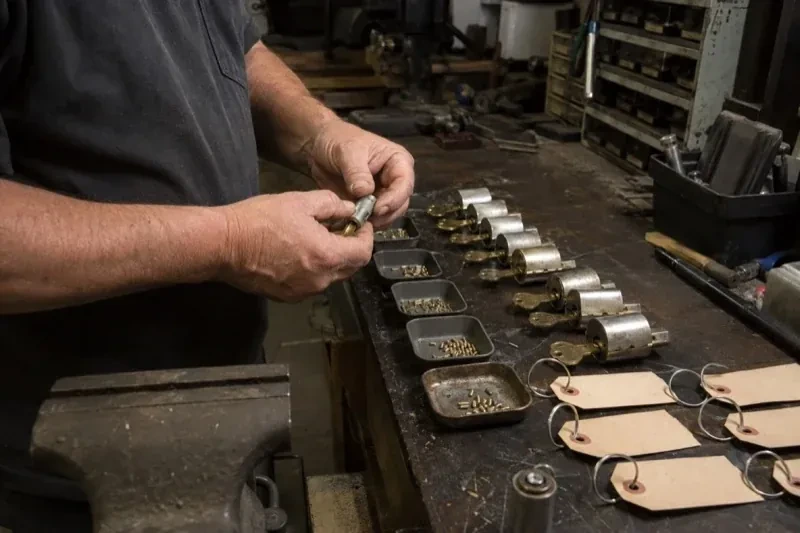
Count the people who need each group, add one spare per group for the safe, and stop there. Extra keys cut 'just in case' are the ones that end up unaccounted for. Because the keys are cut to code from the pinning records, more can be produced later to the same standard, so there is no need to stockpile on the day. Restricted keys are ordered by the named signatories when needed. Commercial Rekeying
How is the key chart kept private?
The chart is handed to a named administrator rather than left as loose paperwork, and it is stored somewhere only that person can reach, separate from day-to-day office records. It is not published, circulated widely or kept alongside general building documents. When the administrator role changes hands, custody of the chart moves with a signed acknowledgement rather than being passed along informally. Master Key System Design
Can different doors run on different schedules?
Yes, and this is one of the more useful parts of the system. A front office can unlock for regular business hours, a stockroom can allow only two credentials at any hour, and a loading dock can release only during a set delivery window. Schedules are set per door and per access level in the controller, and can be changed at any time without touching the hardware itself. Access Control Installation
What outside trim options exist for an exit device?
A plain pull suits a door nobody needs to lock from outside. A lever with a key cylinder lets authorized people turn the handle and enter while the inside stays a simple push. A keyed cylinder alone, without a lever, suits occasional entry where a full handle is not needed. All three leave the inside crossbar untouched, since the trim only ever affects the outside. Panic & Exit Hardware
Car Keys
My keys are in the trunk. Do you have to open the trunk lock?
Almost never. Where the cabin has a usable path, it is opened first and the trunk released from inside using the release lever or the fold-down rear seat; the glowing emergency handle is mounted inside the trunk itself for a trapped occupant, and some vehicles have no cabin release at all. The lid is never forced. If the car has a valet setting that isolates the trunk, the trunk cylinder is decoded and turned like a door cylinder, again without marks. Car Lockout Service
Can you make a key if every key to the car is gone?
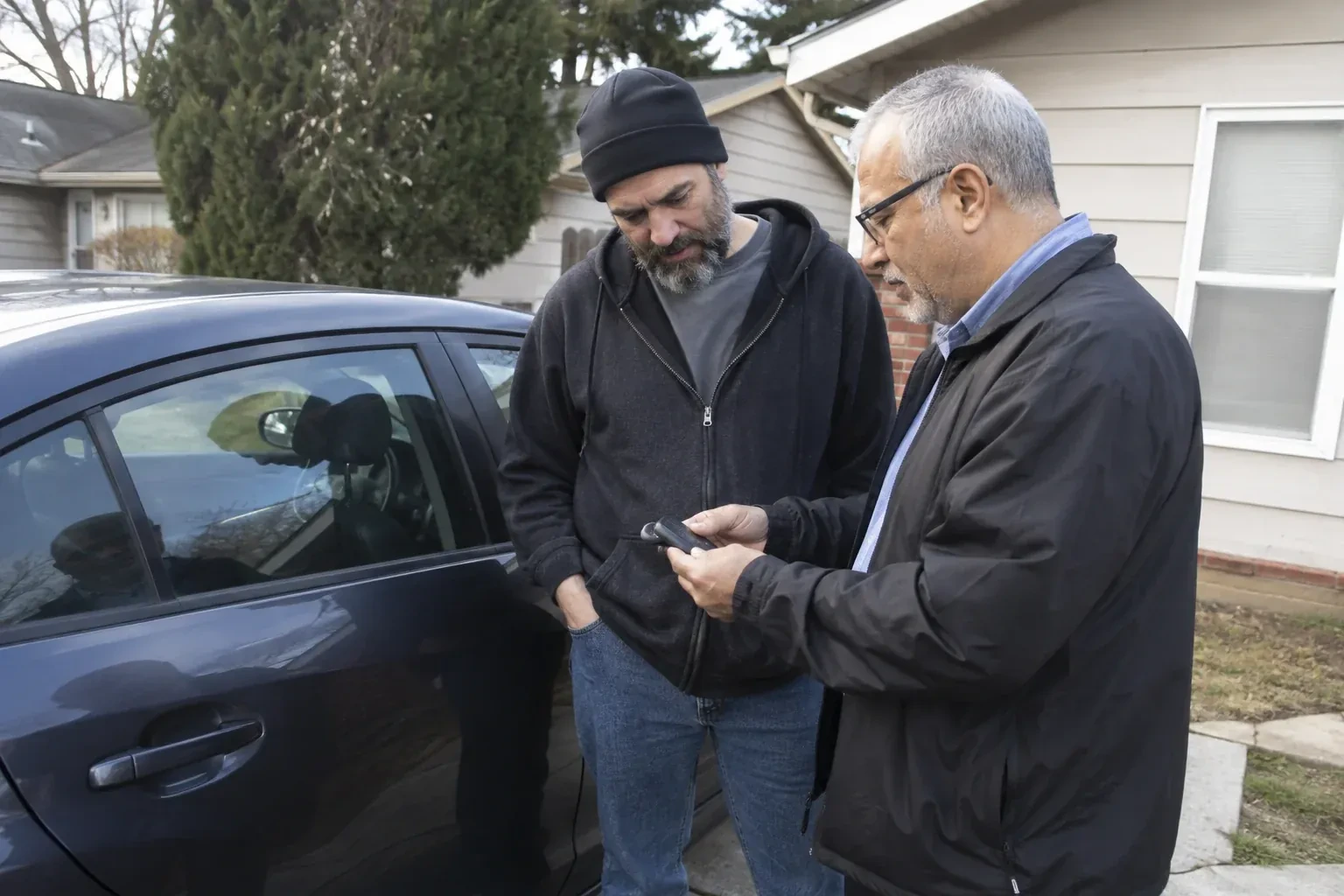
Often, yes, for vehicles with a supported conventional key system: the car is opened, a blade is produced by decoding the door lock or retrieving the factory key code, and the immobilizer is reset so the missing keys are erased before new ones are stored. A key-card or phone-key vehicle, or one needing a dealer procedure, follows its own route instead, which is why the VIN is asked for on the first call. Car Key Replacement
Will the spare include the remote buttons?
If the original has remote buttons and you want the spare to match, yes: the new key or fob is programmed to the vehicle's receiver so locking, unlocking and any other remote function respond the same way from either key. If a simpler spare is preferred instead, the remote portion can be left out while the chip that starts the car is still fully recognized. Spare Car Key Duplication
I bought a used car with only one fob. What are my options?
Ownership of the vehicle is confirmed first, since a fob is only added for someone who can show they now hold the vehicle. From there, an additional fob is sourced and registered alongside the one you have, or, if you would rather not rely on a single fob at all, a second and third can be added in the same visit. Key Fob Programming